Showing posts with label sustainability. Show all posts

Tuesday, December 11, 2007

Get Yourself Into a Pickle!

One of my favorite things about living in Morocco was the family of sheep and goats that lived under my rooftop quarters. They were noisy as hell and didn't smell great, but there was nothing more satisfying than taking out my food scraps and seeing them happily devour them, without a crumb wasted. That plus the fact that there were no plastic bottles, cans, or packaging meant that my total waste from eating was essentially nil.


These days, I often end up with a situation like the one pictured here. I made a lasagna and salad for dinner, but I didn't need a whole cucumber, zucchini, or carrot to make the meal. So I had these halves left over. I usually try to put them in the refrigerator with the hope that I'll eat them in the next few days but that rarely happens, and I usually end up throwing out rotting, soggy halves of vegetables I really meant to eat but never got around to.

That was, until I found out how to make pickles!

Pickling is easy and fun. You don't need any special equipment, but if you have a chance, pick up a cheap pickling jar like the one shown in the photo above. It's a glass bowl with a heavy glass top that adds pressure to the pickles as they sit in the brine. But more on that later. For this batch of used veggies I decided to make two kinds of pickles. The first batch will be regular vinegar style and so I'll cut the pieces small, along with some very thin strips of ginger for flavor.


This type of pickle brine usually calls for:
1/2 cup vinegar
2 tablespoons sugar
2/3 teaspoon salt
ginger cut into small strips

But here's my secret if you don't want to bother with all that. Sushi rice vinegar! It has just about the same proportions of sugar and salt as the recipe and it's all already mixed. It works great but you might want to cut it with a little water if you don't like too sour a taste.

Put the cut vegetables in a bowl and, with your hands, rub them with about a tablespoon of salt.

This is part of the magic of making pickles. Getting the water out of the vegetable and replacing it with the yummy stuff.

After rubbing in the salt for about a minute, leave the bowl for 15 minutes... and...


... you'll see that the salt pushes the water out from the veggies. Separate the water and vegetables and it's on to the last step.


Gently squeeze the vegetables with your hands, kind of bruising them so that the vinegar will be able to get into all the nooks and crannies. Then place them in your bowl or pickling jar.


For the best effect you'll need a heavy lid that presses down on the pickles. The weight of the lid will draw even more water out from the vegetables as water is lighter than the vinegar. As I said before a 12 dollar (1300 yen) pickling jar is great, but if you don't have one I'll show you how you can make your own in the following recipe.


Now with the vegetables under a bit of pressure all you need to do is wait at least 24 hours. If you want the pickles to be eaten much later you should cut the veggies into bigger pieces. If you want to eat the next day, keep the size small and thin.

This recipe will give you a really typical "pickle" taste.


This time I decided to make another batch with a spicy chinese flavor.

3 tablespoons water
2 tablespoons soy sauce
1 tablespoon vinegar
1 teaspoon sugar
1/2 teaspoon salt
(or as before just use sushi vinegar for the last three ingredients)
1 1/2 teaspoons sesame oil
1 small red pepper or red pepper flakes
ginger cut into small strips


Prepare the water, oil, and vinegar mixture.


Just as before you want to bruise the veggies a little by lightly hitting them with the flat side of a knife or something like that.

Mix the vegetables into the vinegar mixture and be sure to coat all the surface area on them.


If you don't have the special pickle jar you can just use two bowls that fit inside each other like this. To get the weight you need for the proper pressure, you can fill the top bowl with water or, like I did here, just put an onion or whatever heavy thing you have laying around in your fridge inside the top bowl.


So here are my two pickles. Regular on the left, and spicy Chinese style on the right. I'll put these in the refrigerator overnight and they should be pretty tasty tomorrow!


The next day, here are the regular style pickles. They really shrunk overnight and are packed with flavor now!


And here are the spicy pickles. Yummy!


Add a bowl of rice and I've made a meal out of what yesterday I was thinking about throwing out because it would probably end up rotting in my refrigerator. It's no substitute for a goat, but making pickles is a simple, tasty way to reduce your waste! Enjoy!

Patrick

Yoga Garden

Friday, November 09, 2007

What Riding a Bike in the City Can Teach You

One of my favorite things about living in Japan is not needing a car. I have never been interested in cars, and I don't really enjoy driving. Sometimes Japanese people will tell me that one of their hobbies is "driving", but for me speeding down an asphalt road in a big hunk of metal with other bigger hunks of metal just inches away also moving at high speeds, it's just not my idea of relaxing.

Instead, I ride my bicycle just about every day of the year. I can get to any part of the city in under a half hour on my bike, often faster than a car. And over time I've learned a lot from riding a bike. These lessons also apply to a well-lived life, and so I'll share them with you now!

Lesson 1: Get off the rails! Back in the early 90's when video games didn't have a lot of processing power, there was a genre called "Rail Shooters." In these games you had a spaceship or a dragon or something, and you were traveling along a path through a stage, shooting at the bad guys. You could move up and down, and strafe to the left or right, but these only gave the illusion of freedom. In reality, you were just on a rail, like a Disney world ride. Here's one of the more egregious examples, StarFox.


Needless to say, these games sucked, and were eventually replaced by games in which you could fly any direction you wanted.

Driving in a car is very much the same experience for me. You're stuck on a track, looking through a big sheet of glass, watching the world go by like so much background scenery in one of those rail shooters. And you can't even shoot anything. Well, you could, but it would end up being a short trip.

On the other hand, on a bicycle the city becomes your playground. Everything is open to you... One-Way streets, red lights, back alleys, jogging paths, shopping streets, these all add to the fun. There is room for variation and creative solutions. I'm sure everyone has had the experience of driving, slipping into a kind of hypnosis, and snapping out of it, finding you have arrived at your destination without even remembering the trip. This has never happened to me on a bicycle. The mind is alert, working, and solving problems.

I think some people kind of have a life on rails. They've locked themselves into situations at work or at home where variation is impossible. Starting the studio was one way we tried to bring more freedom into our lives. Maybe for you the solution doesn't have to be as drastic as opening your own business, maybe just starting a new hobby, going to a place you never thought you'd like, or just putting the left sock on first will be enough to get the brain juices flowing again?

Lesson 2 : When seeking a goal, be flexible and keep the overall picture in mind. Let's say I want to ride my bike to Yokohama station. I always have in mind the arrival point of Yokohama station, but how I get there is not set in stone. For example, if I hit a red light (that I can't blaze through) I'll happily take a left or right and cross the street at another point when the light goes my way. Or sometimes it's just the opposite. The light will be green and it will look like a good chance to get closer to my goal, but by taking the light at that point I'll hit a mass of businessmen getting off the subway which will ultimately take longer than passing on the green and using another route. I've found that what looks like the most direct route on a map is often not the fastest.

When you have a goal, it will rarely turn out that everything goes your way and you can zip right to it. Be ready to take some right turns. Just because your not moving directly towards it doesn't mean that you're not still moving towards it! And also be wary of easy chances for quick gain at the expense of the overall destination point.

And lastly, speed isn't everything. Sometimes I will choose a longer route because it goes down a tree-lined street, a lively part of Chinatown, or past some graffiti I like. Enjoying your life is the ultimate goal after all!
Lesson 3 : Not being attached doesn't mean you don't try. I have written a lot in this blog about the Buddhist idea of "non-attachment" as the key to lasting happiness. But sometimes people take this to mean a laissez-faire approach to life in which you just float along in a kind of haze. That's absolutely the wrong way to approach this, and I've found a great illustration of this on my bicycle which I've been eager to share with people.

On one of my usual bike routes, there is a long street from which you can see the traffic light at the end from really far away. This happens to be a long light without any of those options to zig-zag that I discussed above. So, I can see from a few hundred yards that the light is green. I know that if I pedal hard I have a chance to get across, which will really help me out, as I can get to my destination faster and get on with my day.

So I dig in and go for it, weaving through pedestrians and narrow street like an X-wing through the Death Star. And sometimes I make it through just as the light turns yellow, but often the light turns red before I reach it, and I'm stuck at the corner.

Now here is where the attachment comes in. If I've really built up the idea that I'm going to make the light, get to where I'm going early, have more time to do my stuff, and therefore have a more fulfilling and relaxing day, when I hit the red it's a little upsetting, I might even curse under my breath. On days when my mindfulness isn't really engaged this often happens. But, on a more mindful day, I'll miss the light, and just let it go, coming back to the present moment (as opposed to that fantasy where I got there early and had a more relaxing day) and enjoy the sun, look at the things in the window of the corner shop, and watch the people on the other side of the street going about their day. Much healthier!

But you'll notice that in both situations, I still pedal hard to make the light. Being non-attached to outcomes doesn't mean you just throw in the towel and meander through the streets. Go for it! But if it doesn't go your way let it go just as easily as if you had made it. This is really tough and if you're like me you'll often find yourself almost faking non-attachment, saying to yourself "I didn't really care anyway" when inside you're still churning about the incident. Those times when you honestly and completely let go of attachment are so wonderful and good signs of progress!

Lesson 4 : Don't invest too much in the vehicle. I've never spent more than 120 dollars on a bicycle. Bikes get stolen, run over, and break down, especially the way I ride them. A bicycle or a car is just a way to get somewhere. Maintain them, be good to them, but don't cling to them.

Of course this is also a Buddhist idea, often formulated as "Leave the raft behind." The Buddha didn't want his followers to be attached to him or his practice too much. He compared the Buddhist path to a raft you use to cross to the far shore of a river. When you get there, you would be crazy to pick up and and start carrying the raft! You leave it behind, for it has served it's purpose and is no longer useful. This same light touch should be applied to our spiritual path, whatever it may be. As we can see any day from reading the international headlines, investing too much in your particular religion leads to violence and bloodshed.

However, some people take this to mean that their bodies are also just another vehicle that we shouldn't spend too much time on. Ascetic philosophies stresses this point a lot, with the idea being to transcend the impure, worldly body in favor of the pure mind.

For me, this is a serious mistake. You aren't a little person inside your head "driving" your body around, able to transcend it if you try hard enough. You are your body. I'll say that again, You Are Your Body. Your brain and the rest of you are completely interdependent. Taking care of your mind/body is the single most important thing you can do in your life. Part of this means exercise, part of it meditation, healthy diet, stress reduction, good sleep, and surrounding yourself with a good community of people.

A great way to get a headstart on all of those things is getting out of the hunk of metal with wheels and into the open air on a bicycle! So, see you on the roads, I'll be the one pedaling past you as you wait in traffic!

Patrick

Yoga Garden

Sunday, April 01, 2007

My Little Friends

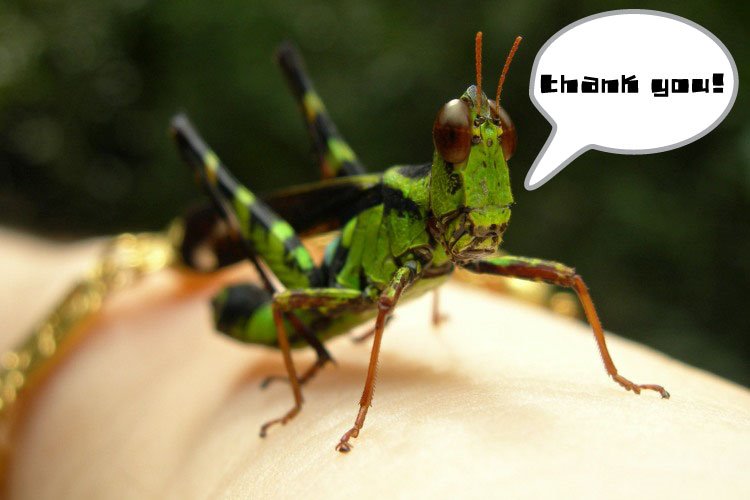
It's spring! Warm weather, blooming trees, life is everywhere. And that includes bugs.

People have a strange relationship with bugs. There is an instinctual fear of insects, which I think comes from the fact that they seem so different from us. Too many spindly little legs, small beady eyes, scary waving antennae. And they are so small, and so unlovable.

This difference in size and cuteness results in a lot of squishing. And some people take pride and joy in the squishing, especially of mosquitos and cockroaches.

But here's a different perspective. This is a chart of all of the Kingdoms of life today. Please enlarge by clicking on it if it's hard to read.As you can see, there are three main Superkingdoms, The Bacteria, Archaea, and Eucaryota, within these are the regular Kingdoms. Humans, of course, are on the Animals branch (animalia). Where are the insects? Surely they must be pretty far from the animals, maybe even another Superkingdom...?

Actually, they're Animalia too! So on that big tree, with all those lines, we and the insects share the same little branch. From this perspective, we're practically cousins.

One of the ideals of Buddhism is to reduce suffering in the world. Killing a lifeform results in suffering, so naturally Buddhists try to avoid killing stuff whenever possible. Notice that the phrase is reduce suffering and not eliminate suffering. To be alive is to cause, (and receive) suffering. Even as I type this, my immune system is killing viruses left and right. Everytime I wash my hands I kill off thousands of microbes and bacteria. And of course, sitting down to a healthy vegetarian lunch includes the decapitation of a head of lettuce, tearing away the life giving umbilical cord of a tomato, and ripping some poor carrot from it's underground home to be cut up into little pieces on my chopping board.

Of course, you could stop eating, take a drug to suppress your immune system, and never wash, but then you would die, which would just be more suffering.

This gets to the idea that to be alive is to participate in suffering to some extent. But we can make choices that reduce suffering in small ways. I think it's safe to say that chopping up a head of lettuce results in less pain than chopping up a cow.

Anyway, vegetarianism is a blog for another time, what I want to talk about here is bugs.

Don't squish bugs! Even gross ones. They didn't do anything to you. Take a closer look at them, and you'll see that they are amazing little animals that are really loveable once you get used to their little quirks.

I know this sounds crazy to some people, and these are the usual objections I get to my "don't squish bugs" sermon.

  • Insects are dirty. Actually, there are more germs in the human mouth than on a cockroach or any other bug. Cockroaches, for example, are really quite clean animals, on par with a cat.
  • Insects are pests and parasites. It's true, many insects use you for their own purposes. Dust mites eat your dead skin, mosquitos incubate their eggs in your warm blood. But let's put this into perspective. Jonas Salk, the man who developed the polio vaccine, once said "If all the insects on earth disappeared, within 50 years all life on earth would disappear. If all humans disappeared, within 50 years all species would flourish as never before." Who is the real parasite? I'm not saying that we should be exterminated, Matrix-style, just that in the big scheme of things, we take a lot more from this planet than that mosquito takes from us.
  • It's just one bug, what's the difference? This is true, squishing that bug doesn't make any difference. But challenging yourself to have compassion for even small ugly creatures will have a big effect on you. And it feels good when you take an extra 30 seconds and help a lost bug get to the outdoors!
I'm not trying to say bugs are more important than humans. The last time I killed a bug was in autumn when one mosquito had bitten me about 12 times all over my face, and had kept me up for about 2 hours. She was resting on the wall, full of blood, and I smacked her with a book. But before that smack I really thought about what I was going to do, and after it I wished the bug the best, and, now I know you'll think I'm losing it, but I shed a tear or two for her.

So, yes, if you run a risk of catching malaria, or if termites are going to destroy your home, or if locusts are going to kill your crops, do something to get rid of the bugs. But don't just squish them because they're there. We're all in this together on this floating blue ball in space, show some kindness to our little relatives this spring!
Patrick

Yoga Garden