Saturday, October 15, 2005

Flying with David Swenson


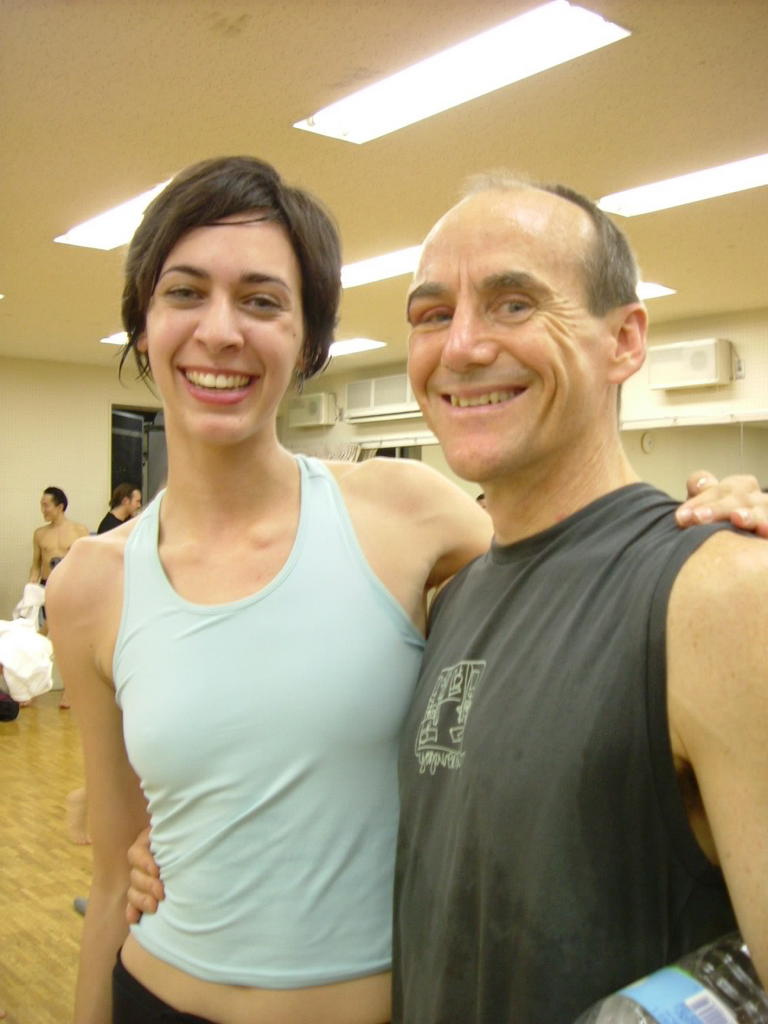
Last night, from 7-9:30 pm, I joined 40+ other yogis & yoginis at a studio in Shinjuku to learn about Ashtanga yoga with David Swenson. The theme of last night's class was "The Physics of Flight" and we focused on the five ingredients necessary for having an Ashtanga practice: breath, vinyasa (flow), drishti (focus), bandha (body valves) & asana (postures). Whew, when I write it out like that there's a lot going on in the body when you do yoga.
For the purpose of this post, let me just focus on one of these 'ingredients,' the breath. The breath is the thread that holds all 5 of the ingredients together. It's the one thing that, if we don't have it, we don't have a yoga practice at all. Last night David said, "the minds is more difficult to control than the wind." And from the Upanishads (sacred yoga texts), "he who has control over his breath has control over his mind." What does this mean for us when we approach the mat? Do we even need yoga in order to reign in the breath/mind? Yoga is a tool for learning to control the breath, and it takes time but eventually you can learn to inhale and exhale with the movement. That's where the idea of 'flight' comes into play. The breath allows you to glide, or flow, or fly, easily between poses.
Clearly there are other ways to flow/fly in life. You can paraglide, skateboard or race cars. Yoga is an accessible, safe way to fly. And all you need, really, is your body. And to do that one thing you've done a handful of times while reading this post: breathe.

Gwen

Yoga Garden

Sunday, October 09, 2005

Eat Your Colors

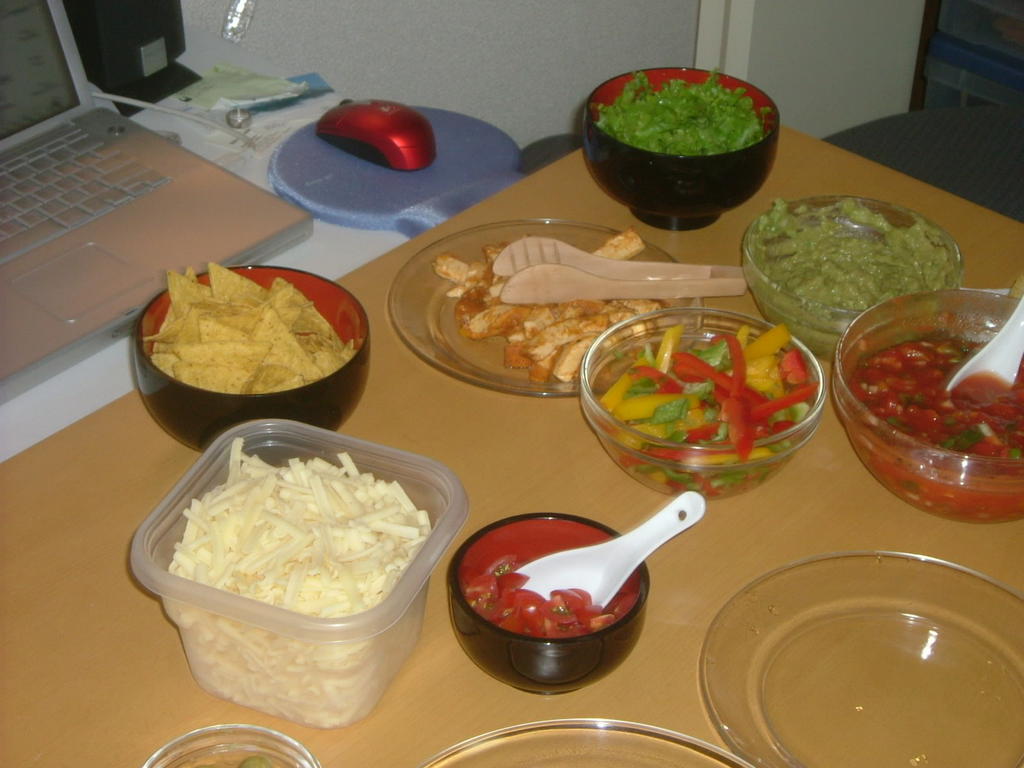
Salsa, bell peppers, and guacamole... a painless way to eat your colors.
Lately a lot of people have been asking me about the "yoga diet" and how they can extend their practice into their eating. The yoga diet is pretty simple; little or no meat, fresh vegetables that are naturally in season, and nothing too spicy or jarring to the system. It's quite striking sometimes, you can read a yoga text from a thousand years ago describing the proper diet and it's almost identical to the FDA's multi-million dollar food pyramid.

Anyway, I've been reading about how important variety is in your fruit and vegetable choices, and it can be a little overwhelming trying to figure out how to get this percentage of Vitamin D and that amount of anti-oxidants and enough of the "good cholesterol," which I still don't really understand. So I was reminded of that big movement a few years ago, "Eat Your Colors."
This movement really stuck with me because it said to use your eyes instead of a chart to achieve a healthy diet. By having a table of many bright, varied colors, you are providing the right balance of nutrients for the body.

The science behind "eat your colors" is that the same things that make fruits and vegetables bright and colorful are also really good for us. These chemicals are called "phytonutrients" and have been closely linked to the anti-oxidant process.

Whatever the science says, the colorful approach to food is tasty, energizing, and nice to look at. I find that certain styles of cooking, especially Mexican, lend themselves well to this approach. So the next time you're in the produce section, try to get a full spectrum of color in your basket, and a full spectrum of nutrients in your body!

If you want more details about phytonutrients, I found this site very informative.

Patrick

Yoga Garden

Thursday, September 15, 2005

Zen and Yoga


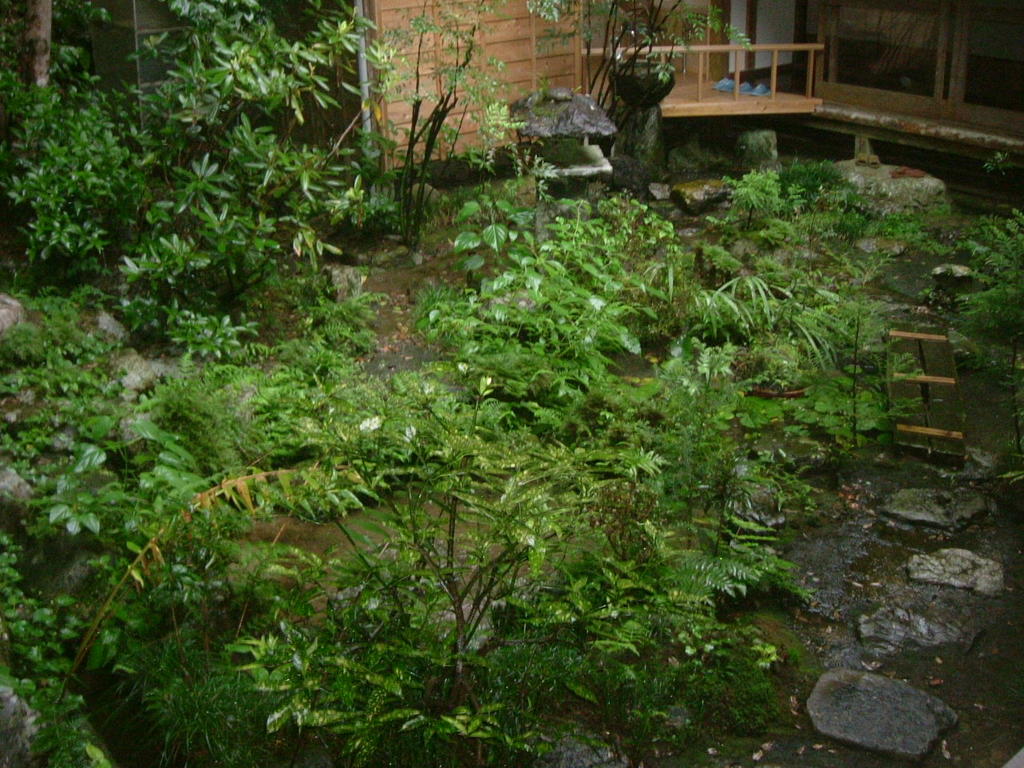
temple garden

Last week Gwen and I went to a 3 day zen retreat near Shizuoka city. It was held at a temple called Tokei-in, which is one of the places Shunryu Suzuki taught at before he went to America. I've been into zen since high school and have recently been thinking about how yoga and zen can be used together. After the session, I solidified my ideas a little more and I'll try to express them here.
How Zen and Yoga work together.

1. The basic sitting posture for zazen meditation is full or half lotus. This posture comes from the asana tradition that has been around five thousands years. So basically, Buddha was struggling to become awakened, and one of the things he remembered was this yoga pose he had done once that made him feel very stable and centered. So at their root the two practices are connected.

2. Many of our students say that one of their favorite things about yoga is that, during a pose, their thoughts drop away and they are totally in the moment. This is the same "no-mind" that zen encourages as well.

3. Back when the monks were living in the temples, they had a lot of manual labor to do during the day, which they approached with the same mindfullness as their meditation practice. So they got a daily dose of physical activity which complemented their seated meditation. But now people work in offices at desks all day, getting no physical excercise, and then go home and try to do some more sitting in zazen. I think yoga is a good substitute for the neccessary physical labors of the past. Only sitting will make your mind too squirrely, I think.

4. Sitting in zazen is physically taxing, as it requires long periods of stillness in a difficult posture. I see yoga as a perfect preparation and post-zen activity, to loosen and awaken the body.

There is a big divide in the alternative therapy world between "meditation" and "excercise." I think you need both to be as healthy as you can be. In the global age we have the chance to discover these different schools of thought, I hope we can keep finding ways that they overlap.

Patrick

Yoga Garden

Friday, August 19, 2005

Vegetable Sushi


Everyone knows vegetables are good for you, but did you know that boiling or sauteeing your veggies breaks down the majority of the vitamins that make them so healthy? This is a big problem for Gwen and me, as we really like soups, chilis, and curries. And aside from salads, we rarely eat raw vegetables. So I've been trying to find creative ways to trick us into eating uncooked vegetables more often.

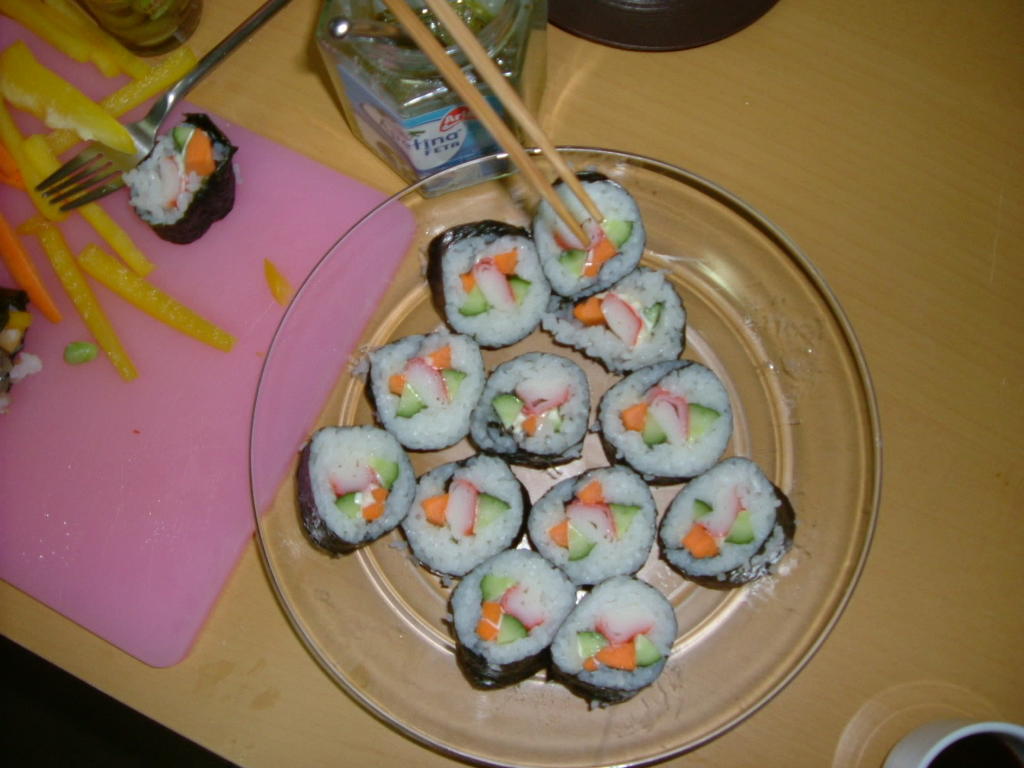
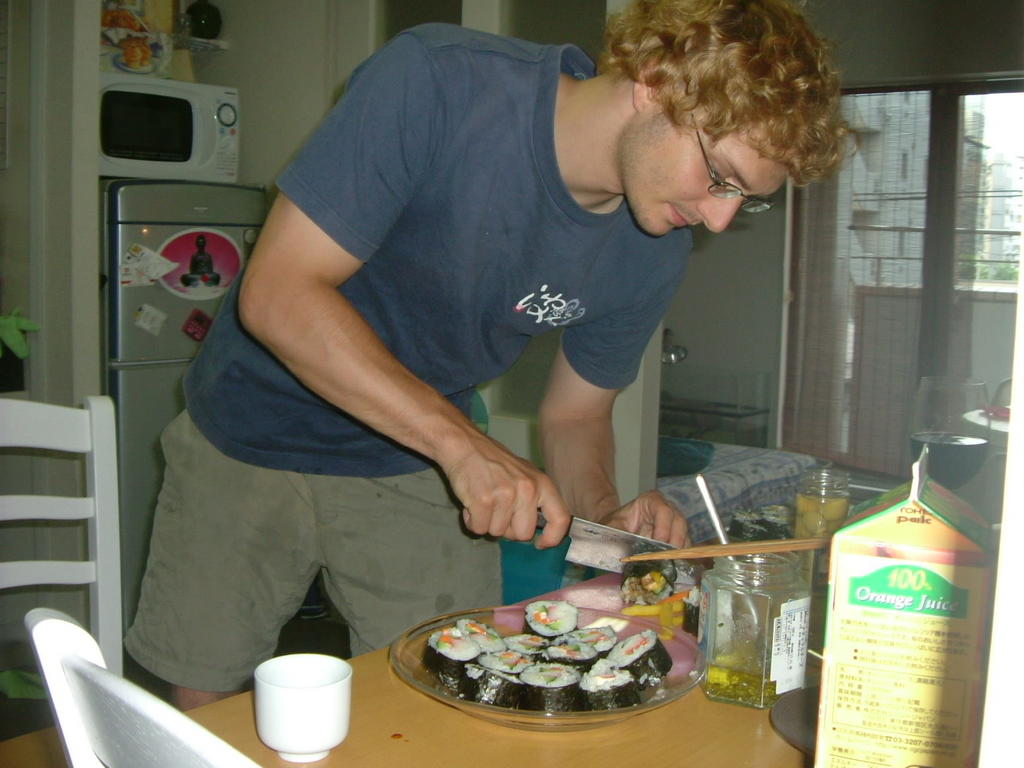
One tasty option is vegetable sushi. When I first started making sushi I tried to be very "by the book," using only the fish and vegetables I had seen in sushi bars. But in the last few years, I've been doing whatever I feel like with the sushi rolls, especially adding all kinds of raw vegetables that I usually find unpalatable. Some of my best combinations:

Classic Roll: carrots, cucumber, and avocado.
Rainbow Roll: with red, yellow, orange, and green peppers. Plus mayonaise.
Crunchy Roll: asparagus gently rolled with creamy sauce and a thin layer of cream cheese.
Green Giant Roll: Broccolli and green beans, dipped in salad dressing.
BLT Roll: Bacos, cherry tomatos, and lettuce.

That's only the beginning! I know it's not really "sushi," but it is a good way to get those veggies down without cooking them to death.
To find out more about proper sushi, check this funky link page.
And a quick meat is bad for you page I just found on Google.
Have any other ideas to trick yourself into enjoying raw foods? Feel free to comment!

Patrick

Yoga Garden

Sunday, August 14, 2005

Rolfing

Kazu visits Yoga Garden!
Have you ever heard of Rolfing? I know, it sounds like something you do when you have food poisoning, but it's named after the lady who invented it, Ida P. Rolf. The name she prefered was "structual integration."

When we opened our studio we tried to find all the other alternative health businesses in our area to let them know about us, and that's how we met Rolfing Kazu. His Rolfing studio is a few minutes up Motomachi street from our place.

So, the idea of Rolfing is that you can correct posture and alignment by working with the outer sheath of tissue (the fascia) surrounding the muscles. Using pressure and long strokes, the facsia is smoothed out and moved into a more efficient position. I was kind of sceptical at first, but I've been "getting Rolfed" for a few weeks now, and the results are amazing. My body is moving much more easily, as if all my joints have been oiled. And my posture is getting much better. I still have 5 more sessions before I finish the Rolfing course, so I'll keep you updated!
If you want to know more about Rolfing, you can visit the Rolfing Institute's homepage.
And here is a link to Kazu's studio.

Patrick

Yoga Garden

Monday, August 08, 2005

Yoga in Yoyogi Park


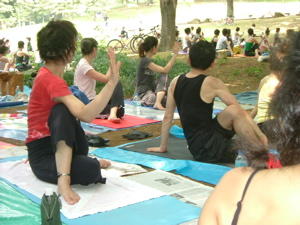
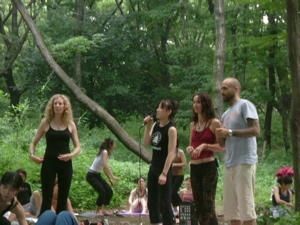
Yesterday I went to a yoga event in Yoyogi Park, sponsored by Yoga Jaya, with special guest Louisa Sear from Australia. The event started around 9:20 in the morning, with about an hour of pranayama (breathing exercises) and meditation. About 150 people turned up. After we did meditation and breathing there was a short break followed by an hour and 15 minutes of yoga asanas (poses). Louisa led a Vinyasa Flow sequence that was challenging and sweat-inducing. Although it was hot, it was lovely doing yoga surrouned by trees, feeling the earth just under the mat, hearing the sounds of a thousand crickets all around us. After asana practice there was an informal picnic...everybody shared watermelon, orange carrot juice and salads. Yoga Jaya plans to sponsor more of these free yoga in the park events in the future...look for us there!

Gwen

Yoga Garden